
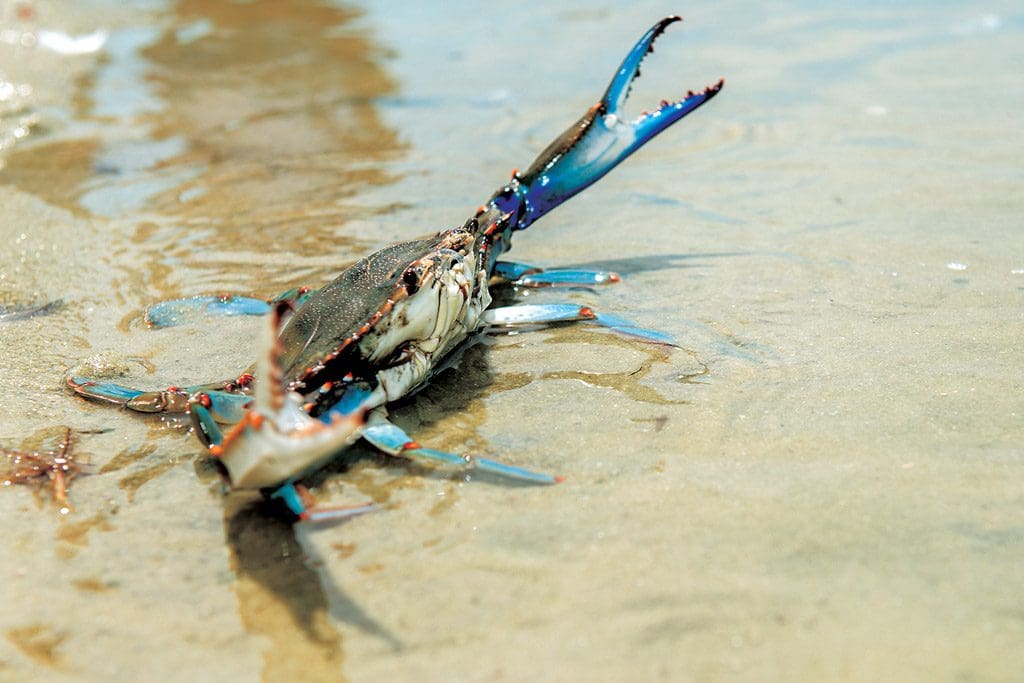
Taking children blue crabbing can be one of the most fun-filled summer activities in Maryland. Exploring the outdoors, getting in tune with the environment, and even creating learning opportunities for kids are among the many advantages of this Maryland specialty. Before taking your young ones crabbing, a few points are necessary.
The Maryland Department of Natural Resources (DNR) regulates crabbing in Maryland, and it is vital to be up-to-date on the guidelines, which may change depending on location and tools used.
When is Maryland’s Crabbing Season?
Typically, recreational crabbing in Maryland begins in April and runs through December 15. According to the DNR’s current fishing-license guidelines, this is considered crabbing season, providing families with several months to experience this Maryland specialty. Weather and waters sporting rules and regulations greatly impact crabbing seasons.
Do You Need a License?
For simple Maryland crabbing with a dip net and handline, no license is necessary. Maryland DNR informs that a recreational crabber who handlines and/or uses a dip net from docks, piers, bridges, boat, or the shoreline and does so in accordance with the applicable daily limits is allowed to do so without a license.
Recreational crabbing licenses are necessary to use the following gear:
- Trotlines
- Collapsible traps
- Net rings
- Seines
- Eel pots for personal-bait purposes
Atlantic Ocean, coastal bays, and their tributaries have special recreational crabbing regulations for license-exempt crabbers, according to the DNR guidelines.
What Gear Can Families Use?
If you are looking for family crabbing, here is an ideal gear that every angler needs.
- Handline
- Bait
- Dip net
- Bucket or cooler
- Measuring gauge
Gloves when handling the crabs and Life-jacket when boating are just some of the gear a family may need. Using simpler tools can also engage children. They can see the hand line float and participate in the activity in general simply by observing.
Special Rules Apply to Crab Pots
Recreational crab pots in certain circumstances have to be equipped with crab pot turtle reduction devices to prevent the trapping of unwanted animals. This device allows blue crabs to enter the trap, but it prevents such wildlife creatures as diamond back terrapins and air breathing animals to come into the lower chamber.
If using crab pots from private waterfront property along the Chesapeake Bay or its tidal tributaries, a free, annual registration is necessary.
Anyone who uses crab pots is in possession for up to two crab pots on registered private property. Only an owner, lessee, tenant, or a representative from one of the designated shoreline communities can use this recreation crabbing option.
Know the Size Rules
In accordance with Maryland’s regulations, any family or individual cannot keep or possess any crab that is less than the size limits. Size rules generally differ for each crab, based on its type. For instance, current DNR guidelines set size limits by describing a hard blue crab as 5 inches during April 1 – July 14 and 5 1/4 inches from July 15 – November 30.
Peeler crabs and soft crabs, on the other hand, apply different, specific rules. In addition to understanding what types of crab are appropriate for releasing back in the water, it is important to be knowledgeable and able to differentiate between the several species.
Pay Attention to Catch Limits
In general, Maryland Department of Natural Resources regulations state that a recreational crabber who handlines or uses a dip net from a boat and does not use a recreational crabbing license may take up to two dozen male hard crabs and one dozen soft crabs and male peelers, in accordance with an applicable rules. Recreational crabbers who use any other gear and hold a valid permit, have to be licensed according to the rules and regulation in accordance with equipment used.
Make Safety Part of the Adventure
In addition to the regulations, parents who wish to take children crabbing should be aware of general outdoor and water safety guidelines. If a family will be using a boat for crabbing, children need to wear life jackets that are recommended and appropriate for their size and activity.
- At piers and shores, parents should implement the rules:
- Do not run near slippery surfaces.
- Do not venture into deep water.
- Do not reach over the rails or into pots.
- Do not touch crabs without an adult’s supervision.
- Do stay with your family group and others in your party.
Let Children Help Safely
Children don’t have to sit on the sidelines and watch every activity. Depending on age, children can help with bait preparation, bucket-holding activities, assisting adults with hand lines, as well as watching for, measuring, counting, and observing wildlife without touching them.
Final Thoughts
Blue crabbing in Maryland can be an incredible family experience, which also helps children learn to be familiar with preserving wildlife. For parents, simplicity is key to successful first-time blue crabbing. Teaching children how to use the tools, measure the crabs, realize what type of crab belongs in the water and what size can be kept are just some of the things a parent can do to start off in the world of blue crabbing in Maryland.
