
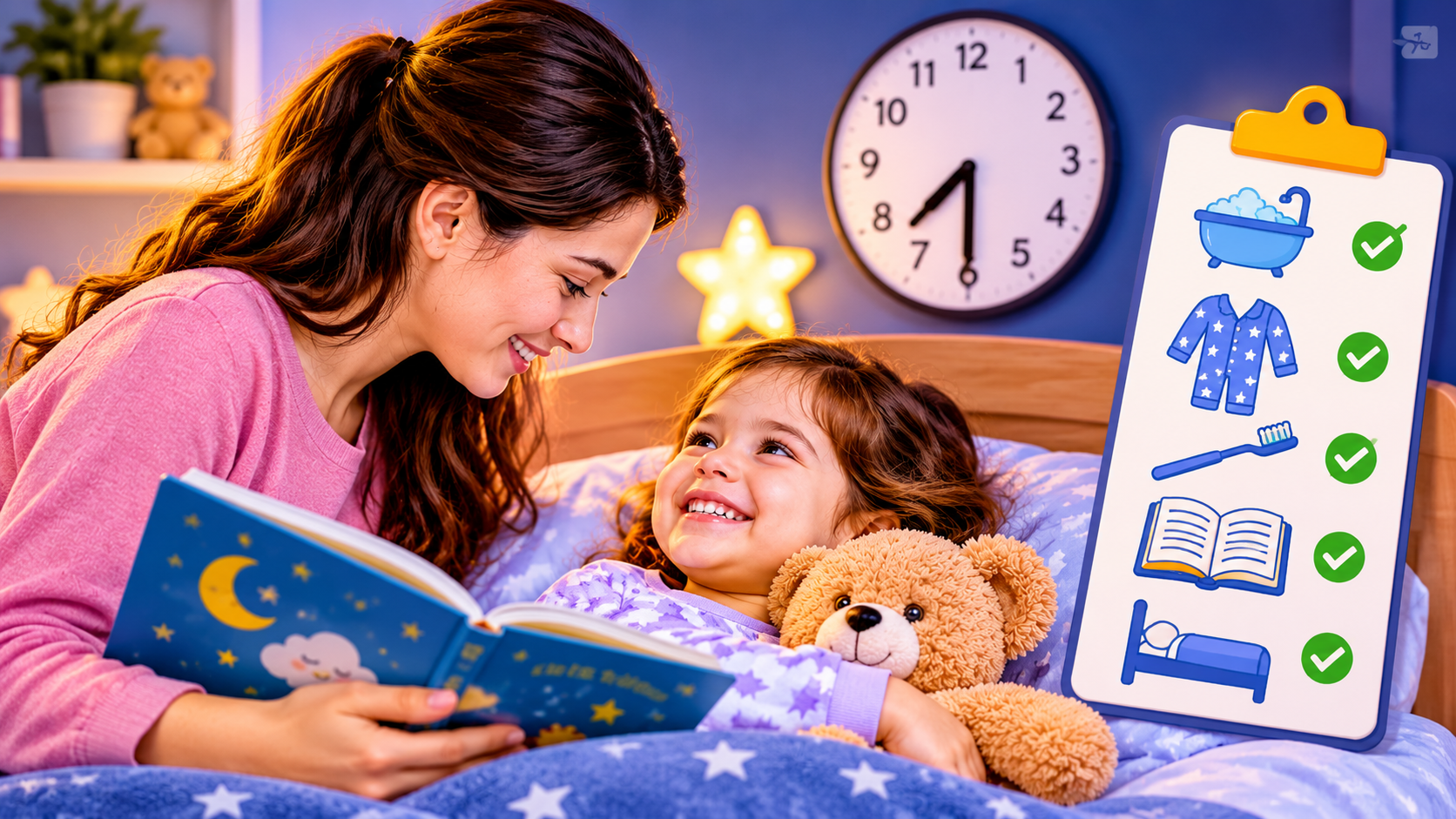
If bedtime at your house involves negotiating, stalling, and a toddler who suddenly needs water, a hug, and a very specific stuffed animal, you’re not alone. Three-year-olds are full of big feelings, growing independence, and endless imagination, which makes winding down surprisingly hard.
The good news? A predictable bedtime routine is one of the most effective tools for calmer nights. This guide walks you through why routines work, how to build one step by step, and how to handle the most common bedtime hurdles.
Why Bedtime Routines Matter for 3-Year-Olds
Toddlers thrive on predictability. When the same calming steps happen in the same order each night, your child’s body and brain learn to recognize the signals that sleep is coming. That makes it easier to relax, fall asleep faster, and stay asleep.
How routines help. Beyond better sleep, consistent routines support mood, behavior, and development. Well-rested children tend to have fewer meltdowns, better focus, and an easier time learning. A routine also gives your child a sense of security, since they always know what comes next.
How much sleep does a 3-year-old need? Most experts recommend about 10 to 13 hours in 24 hours, including naps if your child still takes one. Many 3-year-olds need 10 to 12 hours at night, with or without a short afternoon rest.
Signs your toddler is overtired. Counterintuitively, tired toddlers often get more wired, not sleepier. Watch for:
- Hyperactivity or silliness late in the evening
- Clinginess, whining, or sudden meltdowns
- Rubbing eyes, yawning, or zoning out
- Difficulty settling even though they seem exhausted
Getting Ready: Set the Stage for a Smooth Bedtime
Before you start the routine itself, a few basics make everything easier.
Choose the right bedtime and stick to it. For most 3-year-olds, a bedtime between 7:00 and 8:00 p.m. works well. Work backward from your child’s wake-up time to make sure they’re getting enough sleep, and keep the schedule consistent, including weekends, within about 30 minutes.
Create a calm sleep environment. Keep the room dark, cool, and quiet. Blackout curtains, a comfortable temperature, and a few favorite cozy items can help. A dim night light or gentle white noise is perfectly fine if it helps your child feel safe.
Cut back on screens and stimulation. Try to turn off TVs, tablets, and phones at least an hour before bed. Bright screens and fast-paced content can make it harder for little brains to switch off. Save roughhousing and exciting games for earlier in the day.
The Step-by-Step Bedtime Routine
The ideal routine is short, calming, and repeatable. Here’s a simple seven-step flow you can adapt to your family.
Step 1: Start with a Wind-Down Period
Spend 10 to 15 minutes shifting from active play to quiet activities. Dim the lights, lower your voice, and offer calm options like puzzles, coloring, or building with soft blocks. Giving a heads-up (“In five minutes, we’ll start getting ready for bed”) helps your child prepare for the transition.
Step 2: Dinner, Snack, and a Final Drink
Aim to finish dinner at least an hour before bed. If your child gets hungry, offer a small, light snack such as a banana, yogurt, or whole-grain toast. Offer a last sip of water, but keep it small to avoid extra bathroom trips.
Step 3: Bath Time
A warm bath is relaxing and signals that the day is ending. Keep it calm and relatively short, around 10 minutes. If baths energize your child, try them earlier in the evening or on alternating nights.
Step 4: Pajamas and Tooth Brushing
Let your toddler pick between two pairs of pajamas, which is a simple way to give them some control. Brush their teeth together, making it a predictable, even fun, part of the routine. At this age, a parent should still help or finish the job.
Step 5: Potty Trip
Encourage one last try on the potty, especially if your child is toilet training. Making it part of the routine can reduce nighttime accidents and wake-ups.
Step 6: Storytime and Cuddles
This is often the favorite part of the night. Read one to three short books in a cozy spot, then add a few quiet minutes of cuddling, singing, or talking about the best part of the day. Choose calming stories over exciting ones, and set the number of books ahead of time to avoid “one more!” negotiations.
Step 7: Lights Out and a Loving Goodnight
Tuck your child in, say the same goodnight phrase each night (“Sleep tight, I love you, see you in the morning”), and leave the room. A consistent, confident goodbye helps your child feel secure.
Sample Bedtime Routine Schedule
Here’s how these steps might look in practice, assuming a 7:30 p.m. lights-out.
A 30-minute routine
- 7:00 p.m. – Quiet play and wind-down
- 7:08 p.m. – Bath
- 7:15 p.m. – Pajamas, teeth, and potty
- 7:20 p.m. – Books and cuddles
- 7:30 p.m. – Lights out
A 45-minute routine
- 6:45 p.m. – Quiet play and snack
- 7:00 p.m. – Bath
- 7:12 p.m. – Pajamas, teeth, and potty
- 7:20 p.m. – Books, songs, and cuddles
- 7:30 p.m. – Lights out
Busy nights and travel. Life happens. On hectic evenings or while traveling, keep the core steps (pajamas, teeth, a book, goodnight) and skip the rest. Bringing along a favorite book or comfort item keeps things familiar anywhere.
Troubleshooting Common Bedtime Problems
Stalling and endless requests. Build in one “last call” before lights out, such as one drink, one hug, and one potty try, so your child’s needs are met up front. Then respond calmly and briefly to additional requests.
Getting out of bed repeatedly. Walk your child back to bed quietly, with minimal talking and eye contact. It may take many repeats at first, but consistency teaches them that bedtime is non-negotiable. A “bedtime pass” (one ticket they can trade for a request) can also help.
Fear of the dark. Nighttime fears are very common at this age. Use a night light, check the room together, and offer reassurance without dismissing the fear. A special “monster spray” (water in a spray bottle) can turn imagination into empowerment.
Separation anxiety. Keep goodbyes short and loving, and offer a comfort object like a stuffed animal or blanket. Reassure your child that you’ll be nearby and will check on them.
Transitioning from crib to bed. Make the move feel exciting by letting your child help choose new bedding. Keep the routine identical, and consider a toddler clock or a gate on the bedroom door for safety.
Dropping the nap. If your child seems ready to skip naps, move bedtime 30 to 60 minutes earlier for a while and offer quiet time in the afternoon to bridge the gap.
Tips for Making the Routine Stick
- Be consistent. Even on weekends, a similar routine and bedtime reinforce healthy sleep habits.
- Use visual charts. A picture schedule showing each step helps your child know what’s next and feel proud of completing tasks.
- Offer choices. Let your toddler pick the pajamas, the book, or the stuffed animal. Small choices reduce power struggles.
- Praise effort. Notice what goes well: “You brushed your teeth so nicely tonight!” A sticker chart can add extra motivation.
- Get everyone on the same page. Parents, grandparents, and babysitters should follow the same steps so your child isn’t confused.
Bedtime Routine Mistakes to Avoid
- Skipping the routine when you’re tired. Even a shortened version is better than none.
- Letting bedtime drift too late. An overtired child often has a harder time falling asleep, not an easier one.
- Giving in to every stall tactic. Occasional flexibility is fine, but regularly caving teaches your child that stalling works.
- Adding too many steps. A routine with a dozen steps becomes a marathon. Keep it simple enough to repeat every night.
When to Talk to a Pediatrician
Most bedtime struggles are normal and improve with consistency. Check in with your pediatrician if your child:
- Snores loudly, gasps, or seems to stop breathing during sleep
- Has frequent, intense night terrors
- Is unusually sleepy during the day despite enough sleep
- Has ongoing trouble falling or staying asleep for weeks, even with a steady routine
Frequently Asked Questions
What time should a 3-year-old go to bed? Most do well with a bedtime between 7:00 and 8:00 p.m., depending on wake-up time and nap schedule.
How long should a bedtime routine take? About 30 to 45 minutes is ideal. Long enough to wind down, short enough to avoid dragging on.
Should I lie down with my child until they fall asleep? It can feel comforting in the short term, but it may create a habit that’s hard to break. If you do, consider gradually moving farther away over several nights so your child learns to fall asleep independently.
Is it okay to use a night light or white noise? Yes. A dim, warm night light and steady white noise are both safe and can help your child feel secure and block out household sounds.
Final Thoughts
A good bedtime routine doesn’t have to be perfect or complicated. It just has to be predictable, calm, and loving. Start with a few simple steps, stay consistent, and give your 3-year-old time to adjust. Some nights will still be bumpy, and that’s completely normal.
With patience and a little structure, bedtime can become what it’s meant to be: a peaceful end to the day and a sweet moment of connection with your child.
