
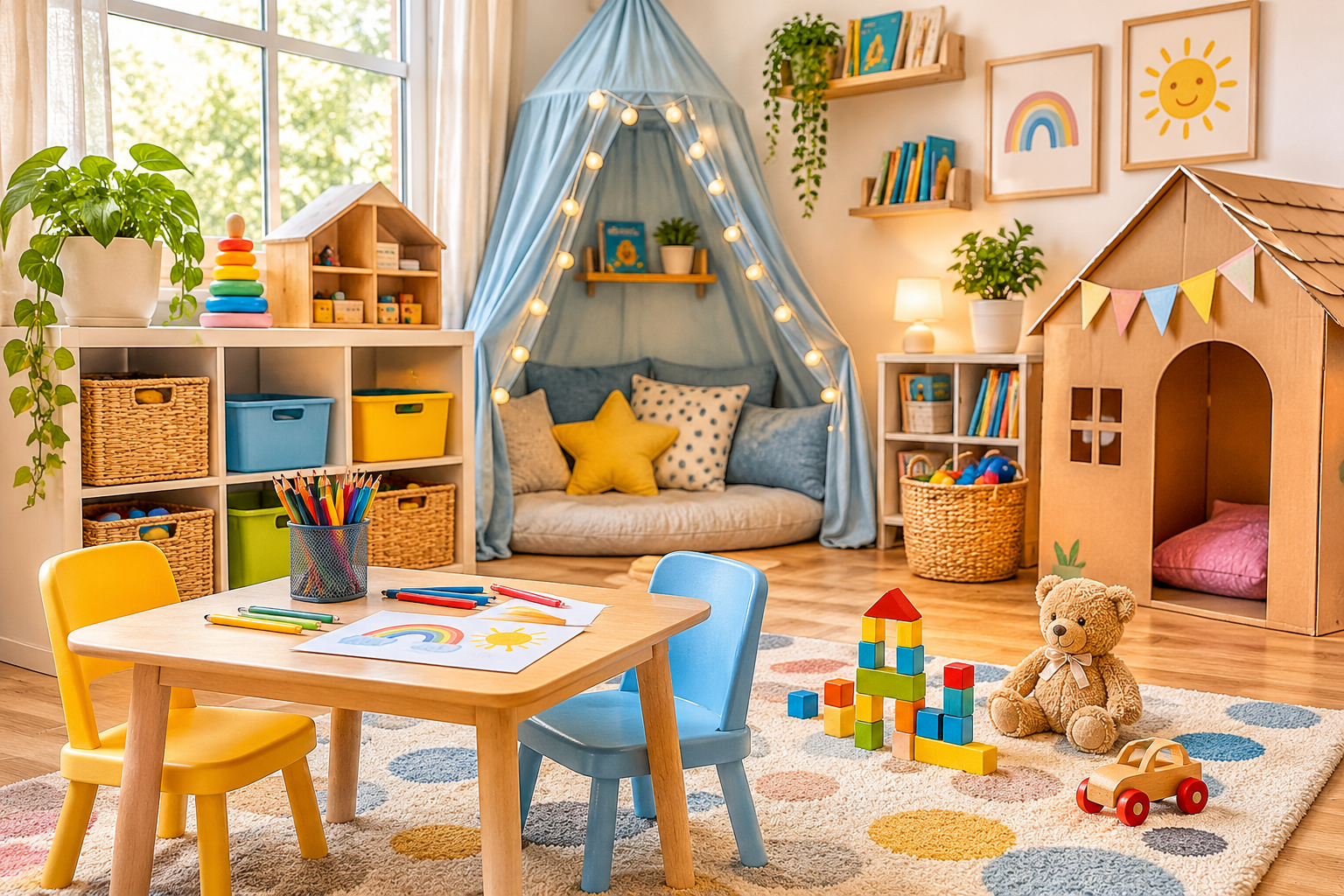
A great playroom isn’t built with a big budget. It’s built with a clear plan, a few smart choices, and a willingness to reuse what you already own. Kids don’t care whether a shelf is designer or secondhand. They care that they can reach their toys, find a cozy spot, and have room to play.
This guide is for renters, small-home families, and anyone starting from zero. You’ll find real cost ranges, space- and age-based ideas, DIY projects, storage systems, and safety tips, so you can build a playroom that works now and still works in two years.
1. Before You Spend a Dollar: Plan First
Impulse buying is the fastest way to blow a budget. Start with four quick steps.
Pick your space. A spare room is ideal, but a living room corner, bedroom nook, closet, basement, or garage can all work. Even 4 x 6 feet is enough for a defined play zone.
Watch how your child plays. Do they build, draw, pretend, or read? Plan around what they actually do, not what a magazine photo suggests.
Set a budget and split it. Decide what is essential (storage, flooring, safety) and what is optional (décor, theme). Spend on the essentials first.
Shop your home first. Old bookcases, spare cushions, bedsheets, baskets, and cardboard boxes can all become playroom pieces.
A simple rule: spend on storage and safety, save on décor and toys.
2. How Much Does a Budget Playroom Really Cost?
Costs vary by location, but these ranges give you a realistic starting point.
| Item | Budget range | Notes |
| Flooring (foam tiles or rug) | 20–80 | Foam tiles are washable and soft |
| Storage (bins, crates, shelf) | 25–100 | Secondhand shelves cost far less |
| Seating (floor cushions, bean bag) | 10–50 | DIY cushions cut the cost |
| Table and chairs | 0–60 | Often free or cheap secondhand |
| Décor (paint, decals, lights) | 10–40 | One accent wall goes far |
| Activities (art, books, blocks) | 10–50 | Library books are free |
The $50 playroom: a rug or foam mat, a few bins, and a cushion corner, with everything else reused from home.
The $200 playroom: add a secondhand shelf, a small table, a chalkboard wall, and string lights.
The $500 playroom: quality flooring, proper storage, a pretend-play station, and a full reading nook.
Don’t forget small costs: wall anchors, labels, paint supplies, and replacement bins add up.
3. 15 Budget Playroom Ideas That Feel Special
- Paint a chalkboard or whiteboard wall. One can of paint turns a wall into an art space.
- Use peel-and-stick wallpaper or decals. They are cheap, quick, and often renter-friendly.
- Build a reading nook. A tent, canopy, or pile of floor cushions is enough.
- Set up a mini art station. Use a small table, a cup of crayons, and a roll of paper.
- Hang front-facing book ledges. Kids pick up books they can see.
- Create a pretend-play corner. A kitchen, shop, or vet clinic from boxes and recycled items.
- Make a cardboard fort or playhouse. Free and endlessly customizable.
- Add string lights. Instant cozy atmosphere for under $15.
- Dedicate a building table. Blocks and Lego stay out of the way of everything else.
- Make a sensory corner. Soft fabrics, textured mats, and sensory bottles.
- Display kids’ artwork. A string and clothespins make a free gallery wall.
- Define the zone with a play mat. It signals where play happens.
- Build a puppet theater. A tension rod and a curtain in a doorway.
- Start a music corner. Shakers, a drum, and homemade instruments.
- Add a swing or climbing feature. Only if it is rated for the weight and installed securely.
4. Budget Ideas by Space
Small apartments and rentals. Use vertical space with wall shelves, choose foldable items, and use rolling carts that tuck away at bedtime.
Living room corner. A rug, one low shelf, and a basket set can mark a play zone without taking over the room.
Shared bedroom. Keep sleep and play visually separate with a rug or curtain so bedtime stays calm.
Closet or under-stairs. Remove the door, add a cushion and a shelf, and you have a secret hideout.
Basement or garage. Cheap and roomy, but add flooring for warmth and check for dampness and air quality.
Siblings of different ages. Give each child a bin or shelf of their own, and keep small-parts toys on a high shelf away from the youngest.
5. Budget Ideas by Age
Babies and toddlers (0–3): Soft flooring, low shelves, and safe sensory toys. Skip anything with small parts.
Preschoolers (3–5): Pretend play, simple puzzles, and books. Open-ended toys like blocks and dress-up clothes give the most value.
School age (6–9): Building sets, board games, art supplies, and a small table for projects.
Tweens (10–12): Cushions, a craft area, music, and a hangout feel. Let them help choose colors and layout.
To avoid redoing everything every year, choose neutral furniture and change only the accessories as your child grows.
6. Budget Storage That Controls the Clutter
Clutter is what makes a playroom feel chaotic, so storage deserves the biggest share of your budget.
- One bin per category. Cars, blocks, dolls, art. Fewer categories mean faster cleanup.
- Use cheap containers. Crates, fabric bins, baskets, and over-the-door shoe organizers all work.
- Keep shelves low. Kids who can reach their toys can also put them away.
- Label with pictures. A photo or drawing on each bin works for kids who can’t read yet.
- Rotate toys. Keep about 70% in storage and swap a few bins each month. Old toys feel new again.
- Declutter gently. Sort toys into keep, donate, and storage with your child so it doesn’t turn into a fight.
7. DIY Playroom Projects
| Project | Materials | Approx. cost | Time |
| Play kitchen | Old nightstand, paint, knobs | 10–25 | 3–4 hours |
| Chalkboard wall | Chalkboard paint, tape, roller | 15–25 | 2 hours plus drying |
| Book ledges | Wood or picture ledges, screws | 10–30 | 1–2 hours |
| Play tent | Bedsheet, dowels or branches, string | 5–15 | 1 hour |
| Art caddy | Tin cans or jars, a crate | 0–5 | 30 minutes |
| Floor cushions | Fabric, stuffing or old pillows | 10–20 | 1–2 hours |
Start with the easiest projects first. Even one or two make the room feel personal.
8. Where to Find Cheap and Free Furniture and Décor
- Thrift stores and online marketplaces: Look for solid wood shelves, small tables, and baskets.
- Local parent groups and Buy Nothing communities: Families often give away outgrown items for free.
- Hand-me-downs: Ask friends and relatives before buying anything new.
- Budget retailers: Good for bins, rugs, and lighting.
- Seasonal sales: After-holiday and back-to-school sales often have the best prices.
- Upcycling: A coat of paint can transform tired furniture.
Buy these new, not used: car seats, cribs, and anything with a recall history. Be careful with old painted items, which may contain lead paint.
9. Budget Flooring and Walls
Foam tiles are cushioned and washable, and they come in sets. Rugs look nicer and are warmer but harder to clean. Play mats are the best choice for babies and toddlers. For renters, choose floor options that need no installation, and use removable decals, washi tape, or poster putty on walls.
10. Free and Cheap Activities to Stock the Room
The best playroom items are often the simplest. Stock open-ended materials: blocks, dress-up clothes, play dough, crayons, and paper. Save cardboard boxes, tubes, jars, and fabric scraps for projects. Borrow books from the library and swap every few weeks. Keep a “rainy day box” of activities for when everyone needs something new.
11. Playroom Safety on a Budget
Safety costs almost nothing, so don’t skip it.
- Anchor bookcases and dressers to the wall so they can’t tip.
- Check toys for recalls and for small parts that could be a choking hazard for younger children.
- Secure cords and cover outlets, and keep furniture away from windows.
- Clean toys regularly with warm soapy water or a mild vinegar solution.
12. Mistakes to Avoid
- Choosing a heavy theme that your child outgrows within a year
- Buying too many toys and too little storage
- Buying adult-sized furniture for kid-sized play
- Shopping without a plan
- Forgetting that adults also need to sit, supervise, and tidy the space
13. Quick Checklist
- Choose the space and measure it
- Set a budget and note what you already own
- Buy flooring and storage first
- Add one seating nook and one creative station
- Anchor all tall furniture
- Label bins and set up a rotation system
- Add décor last
Frequently Asked Questions
How much should I spend on a playroom? Between $50 and $500 covers most families. Prioritize storage, flooring, and safety.
How do I make a playroom without a spare room? Use a corner of the living room or bedroom, mark it with a rug, and use low shelves or baskets for storage.
What are the best toys for a playroom? Choose open-ended toys like blocks, art supplies, dress-up clothes, and books.
How do I organize toys cheaply? Use bins by category, label them with pictures, and rotate toys monthly.
What flooring is best for a playroom? Foam tiles or a washable rug are the most practical and affordable options.
Conclusion
A budget playroom isn’t a compromise. It’s often a better room, because it’s built around how your child plays instead of around what’s trending. Start with a plan, spend on storage and safety, reuse what you have, and add small DIY touches over time.
Pick one idea from this guide and try it this weekend. A rug, a few bins, and a cozy corner are enough to start.
