
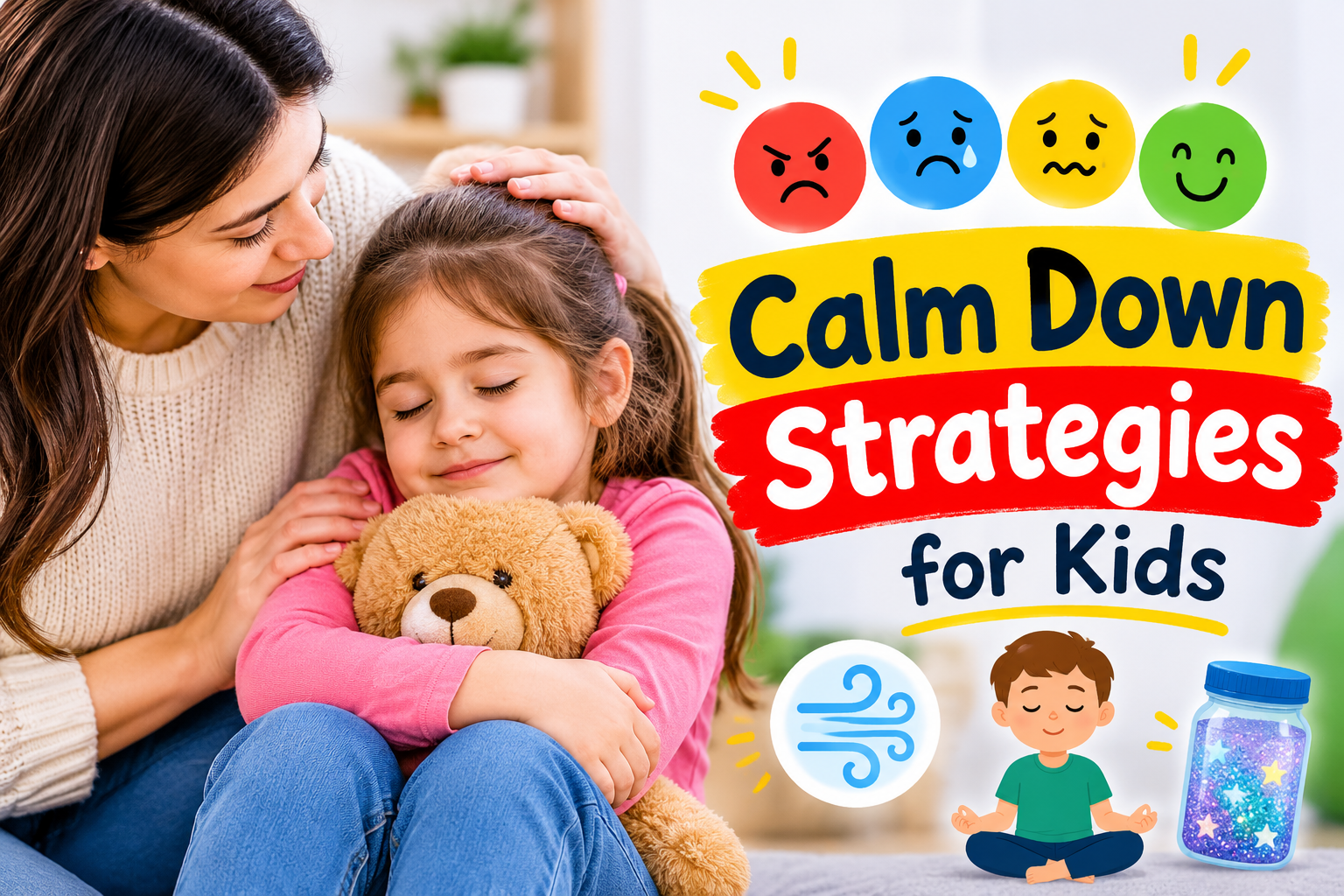
Every parent knows the moment: a toy breaks, a snack is the wrong color, or it’s simply time to leave the park, and suddenly your child is in tears or shouting. Big emotions are a normal part of growing up, but children don’t yet have the skills to handle them alone. The good news is that calming skills can be taught. This guide walks you through simple, practical techniques you can start using today to help your child settle, reset, and build emotional confidence.
Understanding Why Kids Get Overwhelmed
Children’s brains are still under construction. The part responsible for emotions (the amygdala) is highly active early on, while the part that handles reasoning and self-control (the prefrontal cortex) takes years to develop. So when a child feels frustrated, scared, or disappointed, their “thinking brain” often goes offline, and the emotion takes over.
Common triggers include:
- Tiredness or hunger
- Transitions, such as switching from play to bedtime
- Overstimulation from noise, crowds, or screens
- Feeling misunderstood or unable to express needs
Signs that your child needs help calming down can include clenched fists, a flushed face, fast breathing, yelling, crying, or withdrawing completely. Spotting these early lets you step in before a full meltdown.
Before You Start: Tips for Parents
A few habits make every strategy more effective.
Stay calm yourself first. Children borrow calm from the adults around them. Take a slow breath before you respond. Your steady presence does more than any technique.
Validate the feeling. Say something like, “I can see you’re really upset. That’s okay.” Validating doesn’t mean giving in; it means your child feels heard, which helps emotions settle faster.
Teach in calm moments. A child in the middle of a meltdown can’t learn new skills. Practice these strategies when everyone is relaxed, so they’re familiar when they’re needed.
Breathing Techniques
Deep breathing slows the heart rate and signals the body that it’s safe. Make it playful for younger kids.
- Belly breathing: Have your child place a hand on their tummy and breathe in through the nose so the belly rises like a balloon, then out slowly.
- Smell the flower, blow out the candle: Breathe in deeply to smell an imaginary flower, then blow out slowly as if extinguishing a candle.
- Balloon breathing: Cup hands around the mouth and “inflate” a pretend balloon with each exhale, spreading arms wider.
- Five-finger breathing: Trace one hand with the opposite finger. Breathe in as you slide up a finger and out as you slide down, repeating for all five.
Sensory and Movement Strategies
Sometimes the body needs to release energy before the mind can settle.
- Squeeze and squish: Stress balls, playdough, or a soft pillow give tense hands something to do.
- Move it out: Jumping jacks, stretching, dancing, or wall push-ups use up extra energy and reset the nervous system.
- Cozy corner: A quiet spot with blankets, stuffed animals, and soft lighting gives kids a safe place to retreat.
- Calming music: Gentle instrumental music or nature sounds can lower stress quickly.
Pay attention to what your child responds to. Some kids crave pressure and movement, while others prefer quiet and dim light.
Mindfulness and Grounding Activities
Mindfulness helps children return to the present moment instead of getting swept away by big feelings.
- The 5-4-3-2-1 game: Ask your child to name five things they see, four they can touch, three they hear, two they smell, and one they taste.
- Body scan: Guide your child to notice each part of the body from toes to head, relaxing as they go.
- Calm-down jar: Fill a jar with water, glitter glue, and glitter. When shaken, the glitter swirls like a busy mind; as it settles, so do feelings.
- Guided imagery: Invite your child to picture a favorite peaceful place, like a beach or a cozy treehouse, and describe what they see and feel there.
Creative Calm Down Activities
Creative outlets help children process emotions they can’t yet put into words.
- Drawing or coloring: Ask your child to draw how they feel, or simply color to unwind.
- Feelings charts and journals: Pictures of faces help younger kids name emotions; older kids may enjoy writing or doodling in a journal.
- Calming books: Reading stories about characters who manage big feelings can open gentle conversations.
- Music, singing, or dancing: Expressing emotion through sound and movement is a healthy release.
Building a Calm Down Toolkit
A dedicated toolkit gives your child a go-to resource when emotions rise.
Create a calm down corner. Choose a small space in your home with cushions, a blanket, and a few comfort items. Make it clear this is not a punishment spot, but a place to reset.
Fill a calm down box. Good items include a stress ball, glitter jar, coloring pages and crayons, a feelings chart, earplugs or headphones, and a favorite small toy.
Make a calm down plan together. Sit with your child and let them choose three or four strategies they like. Write or draw them on a card. When children help create the plan, they’re far more likely to use it.
Age-Specific Strategies
Toddlers (ages 1-3): Keep it simple and physical. Offer hugs, gentle rocking, a soft toy, or a change of scenery. Use short phrases like “You’re sad. I’m here.”
Preschoolers (ages 3-5): Playful techniques work best, such as balloon breathing, calm-down jars, and cozy corners. Use feelings charts to help them name emotions.
School-age kids (ages 6-12): Older kids can handle mindfulness exercises, journaling, and problem-solving. Involve them in choosing their own strategies, and respect their need for space.
What to Do During a Meltdown
When emotions are at their peak, your goal is safety and connection, not teaching.
- Stay close and keep your voice low. Your calm tone helps anchor your child.
- Ensure safety first. Move dangerous objects away, and if needed, gently guide your child to a safe space.
- Say less. Try: “I’m right here. Take your time.” Avoid lecturing, bargaining, or saying things like “Stop crying” or “You’re overreacting.”
- Wait, then talk. Once your child is calm, discuss what happened and what they might try next time.
Helping Kids Practice Calm Strategies Daily
Calming skills are like any other skill: the more kids practice, the better they get.
- Build it into routines. Try a few deep breaths before meals, at bedtime, or after school.
- Model and role-play. Let your child see you using these tools: “I’m feeling stressed, so I’m going to take three deep breaths.” Practice with stuffed animals or puppets for younger kids.
- Praise effort. Say, “I noticed you took a deep breath when you were upset. That was great!” Recognizing progress builds confidence.
When to Seek Extra Help
Most meltdowns are a normal part of childhood. However, consider reaching out to a pediatrician or child therapist if your child’s emotional outbursts are very frequent or intense, last a long time, interfere with school or friendships, or come with constant worry, sleep problems, or aggression. Getting support early is a sign of strong parenting, and it can make a real difference.
Conclusion
Helping your child calm down isn’t about stopping big emotions; it’s about giving them the tools to move through those feelings safely. Start small. Pick one or two strategies, practice them during peaceful moments, and be patient with the process. With consistency, kindness, and a calm example, your child will grow more confident in managing whatever life brings.
FAQs
How long does it take for a child to calm down? It varies by child and situation, but most kids need anywhere from a few minutes to 20 minutes. Younger children and intense emotions may take longer. Give your child time without rushing.
What if my child refuses to try calming techniques? Don’t force it. Try again during a calm moment, make it playful, and let your child choose which strategy to use. Modeling the techniques yourself often encourages them to join in.
Can these strategies work for kids with ADHD or autism? Yes, many of them can, especially sensory and movement-based techniques. Every child is different, so it helps to observe what works best and consult a professional for personalized support.
