
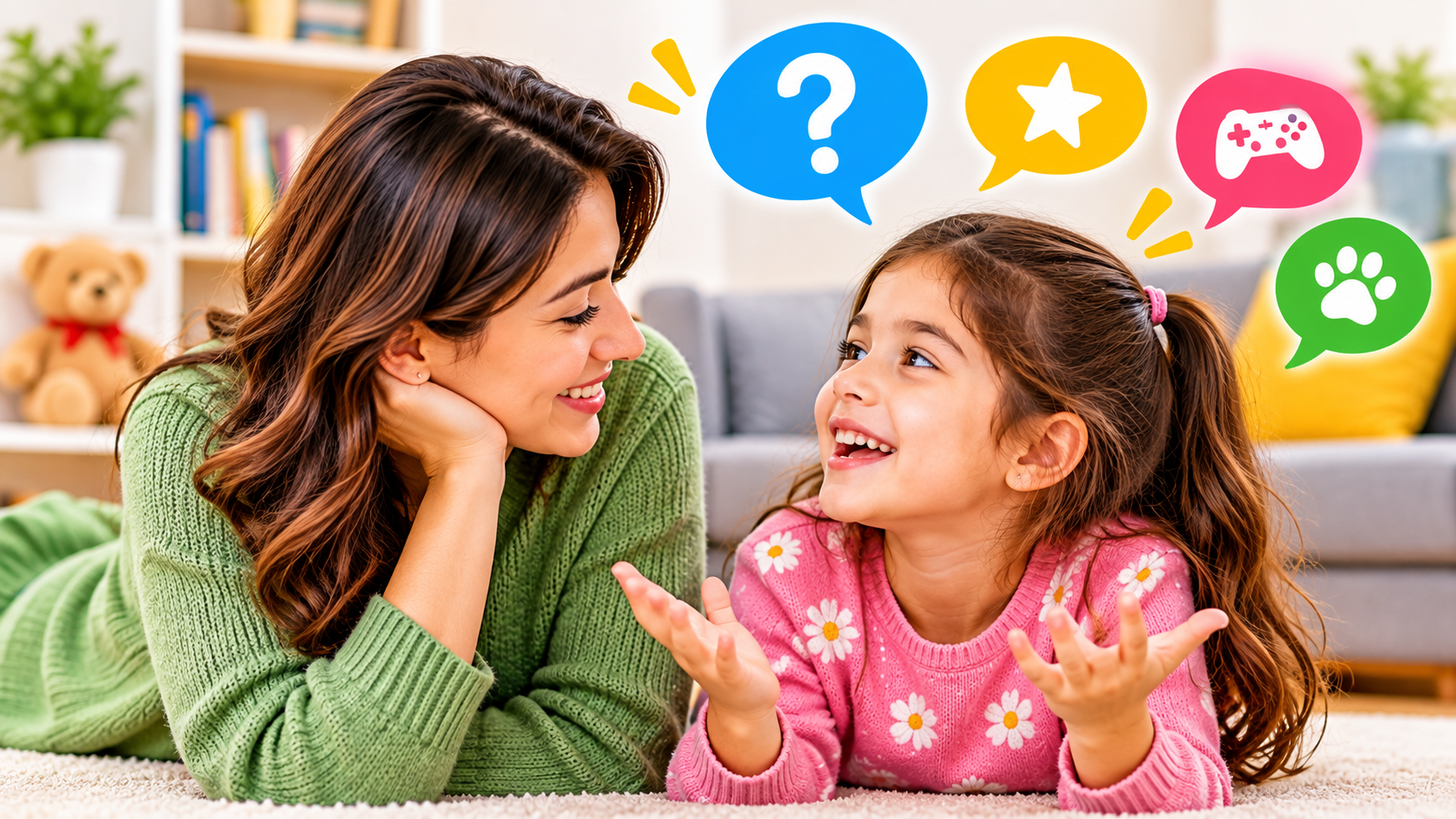
Every parent knows the feeling. You ask, “How was school?” and get a shrug, a mumbled “fine,” or silence. Getting kids to open up isn’t about asking more questions. It’s about asking better ones.
This guide gives you the best conversation starters for kids, organized by age, situation, and mood, plus practical tips for turning short answers into real conversations.
Why Conversation Starters for Kids Matter
Talking with your child does more than fill the silence. Regular conversation helps kids build vocabulary, express their feelings, and think through problems. Kids who practice sharing their thoughts at home tend to be more confident speaking up at school and with friends.
Conversation also builds trust. When children learn that you’re genuinely interested in what they think, they’re more likely to come to you when something difficult happens. Those small chats at dinner or in the car are what make big conversations possible later.
Tips for Getting Kids to Open Up
Even the best questions fall flat without the right approach. Keep these tips in mind:
- Choose the right time and place. Kids often talk more during side-by-side activities like driving, walking, or baking than during face-to-face “sit-down talks.” Bedtime is another sweet spot.
- Ask open-ended questions. Questions that start with “what,” “how,” or “why” invite more than a yes or no. Instead of “Did you have fun?” try “What was the most fun part of your day?”
- Listen without judging or interrupting. If a child feels corrected or criticized, they’ll stop sharing. Respond with curiosity: “Tell me more about that.”
- Share your own answers too. Conversation should go both ways. When you answer your own questions, kids see that sharing is normal and safe.
Fun Conversation Starters for Kids (General)
These work for most ages and are great for warming up a quiet child.
Silly and imaginative questions
- If you could have any animal as a pet, what would it be and what would you name it?
- If you could invent a new ice cream flavor, what would it taste like?
- If you woke up with a superpower tomorrow, what would it be?
- What would you do if you were invisible for a day?
- If you could live anywhere in the world, where would it be?
Favorite things questions
- What’s your favorite thing to do on the weekend?
- What’s the best meal you’ve ever eaten?
- Which book, show, or game are you obsessed with right now?
- What’s your favorite place to go with our family?
Conversation Starters by Age Group
Kids at different stages need different kinds of questions.
Toddlers and preschoolers (ages 2-5)
Keep it simple and concrete.
- What was your favorite toy today?
- What color do you like the most?
- What did you see on our walk?
- Who did you play with today?
Early elementary (ages 6-8)
Kids this age love stories, rules, and fairness.
- What was the funniest thing that happened today?
- Who did you sit with at lunch?
- What’s something new you learned this week?
- If you were the teacher for a day, what would you teach?
Tweens (ages 9-12)
Tweens want to be treated as capable and independent.
- What’s something you’re really good at that you’d like to get even better at?
- What do you and your friends talk about the most?
- If you could change one school rule, what would it be?
- What’s one thing you wish adults understood about kids your age?
Teens (ages 13+)
Teens respond to respect and real curiosity, not interrogation.
- What’s something you’ve been thinking about lately?
- What’s a song or video you think I should check out?
- What’s something you’re looking forward to this year?
- Is there anything stressing you out that I can help with?
Conversation Starters for Different Situations
At the dinner table
- What was the best part and the hardest part of your day?
- If our family could take a trip anywhere, where should we go?
- What’s one nice thing you did for someone today?
During car rides
- What song should we play next, and why?
- If you could be any character in a movie, who would you be?
- Let’s make up a story together, one sentence at a time.
At bedtime
- What made you smile today?
- Is there anything on your mind before you sleep?
- What are you looking forward to tomorrow?
In the classroom
- What’s one thing you want to learn this year?
- Who is someone you admire, and why?
- What’s a goal you’d like to reach by the end of the month?
At home on a rainy day
- What would your dream treehouse look like?
- If you could design your own board game, what would it be about?
- What’s the best rainy-day activity you can think of?
Would You Rather Questions for Kids
“Would you rather” questions are a favorite because they’re low-pressure and often hilarious. They also get kids explaining their reasoning.
- Would you rather be able to fly or be able to breathe underwater?
- Would you rather have a pet dinosaur or a pet dragon?
- Would you rather eat pizza every day or ice cream every day?
- Would you rather be the smallest person in the world or the tallest?
- Would you rather have no homework or no bedtime?
Follow up with “Why did you pick that?” to turn a quick game into a real conversation.
Deep Questions to Help Kids Share Their Feelings
Once your child is comfortable talking, you can gently go deeper.
Questions about friends and school
- Who makes you feel happy when you’re around them?
- What’s something that was hard at school this week?
- Is there anyone you’d like to be better friends with?
- What would make school better for you?
Questions about emotions and challenges
- What’s something that made you feel proud recently?
- When you feel upset, what helps you feel better?
- What’s something you’re worried about?
- Is there something you wish you could talk about but aren’t sure how?
If your child shares something hard, thank them for telling you. Avoid rushing to fix it. Sometimes they just need to feel heard.
Better Questions to Ask Instead of “How Was School?”
“How was school?” is too broad, and the easy answer is “good.” Try these instead:
- What was the best part of your day?
- Who made you laugh today?
- What did you do at recess?
- What’s something you learned that surprised you?
- Did anyone do something kind today?
- If you could redo one part of today, what would it be?
- What was the most boring part of your day?
Specific questions are easier to answer, and kids often find them more fun.
Conversation Games and Activities for Kids
Games take the pressure off and make talking feel natural.
- Rose, thorn, bud. Each person shares a “rose” (something good), a “thorn” (something hard), and a “bud” (something they’re looking forward to).
- Two truths and a lie. Everyone shares three statements about themselves, and the others guess which one is false. It’s great for learning surprising facts about each other.
- Conversation jar or card deck. Write questions on slips of paper and put them in a jar. Take turns drawing one at dinner or in the car. Store-bought card decks work just as well.
What to Do When Your Child Won’t Talk
Handling one-word answers
Don’t take short answers personally. Try a follow-up like “What made it ‘fine’?” or “Tell me one thing that happened.” You can also try an either-or question: “Was lunch more funny or more boring today?”
Respecting quiet time and space
Some kids need time to decompress after school before they’re ready to talk. Offer a snack, give them space, and revisit the conversation later. Let them know you’re available when they’re ready: “I’m here whenever you want to chat.”
Also, don’t force it. Pressure usually leads to more silence. Consistency matters more than any single conversation.
Frequently Asked Questions
How do I start a conversation with a shy child?
Start with low-pressure topics like favorite foods, games, or animals. Talk while doing an activity together, such as drawing or walking, so there’s no pressure to make eye contact. Give them plenty of time to answer.
How often should I ask these questions?
Aim for a little bit every day rather than one big talk. A few minutes at dinner or bedtime builds a habit and makes conversation feel normal.
What age should I start?
As early as possible. Even toddlers benefit from simple questions about their day. As they grow, the questions get more complex, but the habit of talking stays the same.
Final Thoughts
The best conversation starters for kids are the ones that show you’re truly curious about who they are. You don’t need a perfect list or the perfect moment. Pick a few questions, try them at dinner or in the car, and keep listening to the answers.
Start with one question today. You might be surprised by what you learn.
